Pool Cue Guides
American-Made Pool Cues: McDermott vs Pechauer vs Viking
Three Wisconsin cue makers. Three different solutions for taper, shaft technology, limited editions, and long-term collecting value.
Key Takeaways
Wisconsin Cue Center
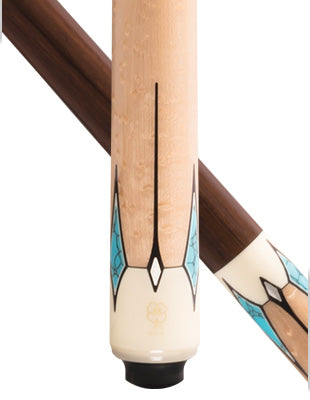
McDermott, Pechauer, and Viking all build flagship cues in Wisconsin and back them with lifetime warranties.
McDermott Ladder
McDermott offers the broadest shaft technology progression from traditional maple to carbon fiber.
Pechauer Feel
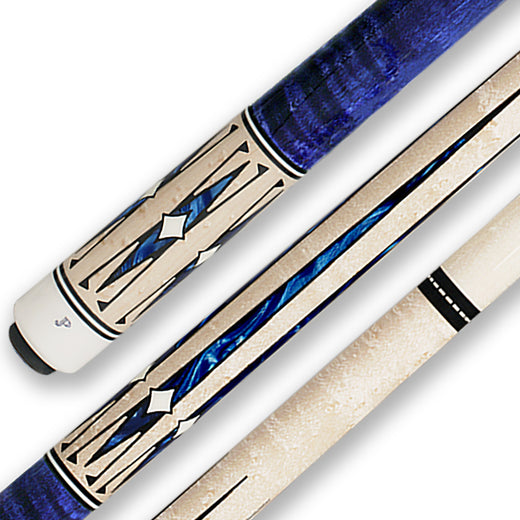
Pechauer is family-owned, firm-feeling, and has the most varied approach to modifying wood.
Viking Smoothness
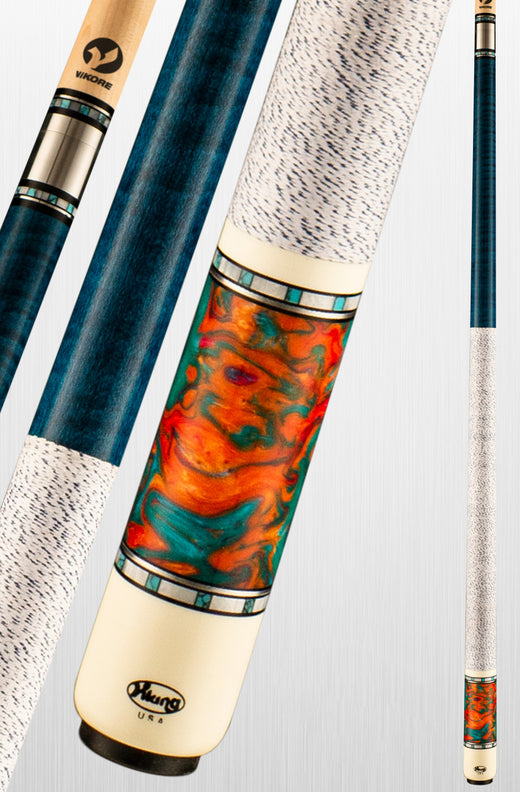
Viking has the longest standard wood-shaft taper here and engineers ViKORE for lower deflection.
Wisconsin is, improbably, the center of the American production-cue universe. McDermott in Menomonee Falls, J. Pechauer Custom Cues in Green Bay, and Viking in Middleton all build their flagship cues entirely in the USA and back them with lifetime warranties covering warpage. But they are solving different problems.
- McDermott offers the broadest shaft technology ladder, from traditional maple to carbon fiber.
- Pechauer is the only family-owned maker among the three, with the firmest traditional feel and the most varied approach to modifying wood.
- Viking offers the longest standard wood-shaft taper of the three and engineers the inside of its ViKORE shaft to reduce deflection while keeping the look and feel of maple.
Quick shopping links: McDermott | Pechauer | Viking | Cue of the Month | Shaft options
1Pool Cue Tapers: What 10-Inch, 12-Inch, and 14-Inch Pro Tapers Actually Mean
The modern pro taper was developed and named by Bob Meucci. By the 1980s, other cue manufacturers were widely adopting and adapting the design, and "pro taper" eventually became a general industry term — but it is widely misunderstood.
A pro taper does not mean the shaft remains perfectly straight or cylindrical for 10, 12, 14, or 16 inches. The diameter gradually increases throughout that entire distance. The stated length identifies the approximate slow-rise region before the shaft begins increasing in diameter more noticeably toward the joint. No pro taper is doing anything fundamentally different from another in terms of geometry — they all rise incrementally through the front section and taper more quickly toward the back half of the shaft. The number tells you how long that slow-rise region extends, nothing more.
What taper length actually changes is how the shaft fits and moves through your bridge hand, and how stiffness is distributed.
| Taper Length | What the player generally feels |
|---|---|
| 10 inches | The shaft becomes fuller sooner and develops stiffness closer to the tip. Compact, firm, direct. |
| 12 inches | A middle-ground profile — smoother bridge stroke than a short taper, still relatively immediate feedback. |
| 14 inches | Remains slimmer farther behind the tip, travels smoothly through a closed or long bridge, allows more flex. |
| 16 inches | The slow-rise section extends farthest — longest slender bridge area and greatest potential flex among otherwise comparable wood shafts. |
"Otherwise comparable" is the critical phrase. This relationship between longer taper and greater flex holds when comparing traditional solid-wood shafts. It breaks down the moment you cross into carbon fiber. A 16-inch carbon-fiber shaft can be substantially stiffer than a 10-inch solid-maple shaft — its wall thickness, carbon orientation, resin system, and internal construction override what the outside taper suggests. Pechauer's Rogue 2 makes this point clearly: its 12.4mm and 12.8mm versions use 16-inch pro tapers, yet Pechauer rates it as 20 percent stiffer than the previous carbon model. Taper tells you how the shaft moves through the bridge. It does not independently determine deflection or stiffness.


How the three brands handle taper
Pechauer publishes its taper specs plainly: a 10–12-inch pro taper on a 29-inch hard-rock maple shaft, across nearly the entire JP and Pro Series. It is the shortest standard taper of the three brands, producing the classic Pechauer personality — firm, direct, crisp feedback that players who want a traditional custom-shop feel tend to love. The Rogue 2 carbon shaft goes the other direction, with a 16-inch pro taper on the 12.4mm and 12.8mm versions.
McDermott uses a 10–12-inch pro taper across its standard maple shaft and its performance shafts — G-Core, i-2, and Defy. McDermott markets some of these profiles with proprietary names, but no pro taper is perfectly straight for its stated length; all gradually increase in diameter from tip to joint, with a slower rise in the front section and a faster rise toward the back half. The taper is not doing anything unique or magical — it is a 10–12-inch pro taper, the same as the standard maple shaft.
Viking's standard playing-cue taper is the longest of the three: 12–14 inches. This keeps the shaft slim through more of the bridge area and produces the smooth, stable, forgiving feel Viking is known for — particularly comfortable for players with a longer stroke or a closed bridge. Beginning in 2024, Viking also moved all models to a slimmer butt taper of 1.250 inches, down from 1.295 — a change players notice in the grip hand. Viking's break and jump cues use a conical taper instead, a much stiffer, power-oriented shape.
One caveat worth stating plainly: taper alone does not determine deflection. Cue-ball squirt is driven primarily by front-end mass — tip diameter, ferrule length and material, shaft stiffness, and internal construction all play roles. A longer taper can contribute to lower deflection, but ferrule design or a lightweight core can matter more than taper length alone. For a deeper dive, see our full replacement shaft and upgrade options.
The good news for buyers: you don't have to order factory-direct to get these options. At Budget Billiards, we make tip diameter, taper, weight, and shaft options available on Pechauer, McDermott, and Viking pool cues alike — so you can spec your cue exactly the way you want it, on any of the three brands, in one place.
2Why Two Solid-Maple Shafts With the Same Taper Can Feel Different
This is something players discover and rarely find explained. Two shafts cut to identical diameter and taper measurements can feel noticeably different in stiffness, vibration, recovery, and feedback — because maple is a natural material.
Growth-ring spacing is one visible part of this. Shaft blanks with tightly spaced, straight, evenly running grain lines are generally selected for greater stability and a firmer response. Widely spaced grain can indicate more flexibility. But grain count is not an infallible stiffness grade — density, grain runout, orientation, moisture history, seasoning, and internal stress all matter. A tight-grained blank can still have runout; a slightly wider-grained blank can be unusually stiff.
This natural variation is why a player may love one traditional maple shaft and find another shaft of the same model less satisfying — and why engineered shafts exist.
3Shaft Technology: What Each Brand Has Done Beyond Solid Maple
McDermott: The Broadest Progression
McDermott offers the clearest step-by-step progression from traditional maple to engineered wood to carbon fiber — and the G-Core vs. i-series comparison is one of the most common questions we get. You can browse all McDermott shafts here.
McDermott G-Core uses a 10–12-inch pro taper with a triple-layer carbon-fiber core running through the first seven inches of the shaft. The ferrule assembly also uses a carbon-fiber core with a dampening ring at its base. That seven-inch placement is deliberate — the front portion is the part most involved in the cue-ball collision. The carbon stabilizes the critical impact area while the remainder of the shaft retains more of the natural response and vibration character of maple. The result is traditional maple feel with a stabilized, more consistent front end.
McDermott Intimidator i-2 also uses a 10–12-inch pro taper — so the outside profile is not the difference. What changes is inside: six-piece construction with a full-length triple-layer carbon-fiber core running from ferrule to joint, and a short 1/4-inch Ivorine III ferrule.
This is why taper specs alone cannot explain a shaft:
- G-Core: carbon core in the first seven inches, concentrating reinforcement in the impact zone, with the remainder of the shaft retaining natural maple character.
- i-2: full-length carbon core tying the complete shaft together structurally, making it more uniform from tip to joint and less dependent on individual wood variation.
- Both: the same 10–12-inch outside pro taper.
The i-2 should feel more structurally controlled than G-Core. Its shorter ferrule also reduces front-end mass compared with a traditional long-ferrule shaft. For more on McDermott shaft technology, see our articles Is McDermott a Good Pool Cue? and Are McDermott Cues Made in America?
McDermott Defy moves to carbon fiber entirely. McDermott calls its taper profile a "Hybrid Taper," but as with any pro taper, the shaft gradually increases in diameter from tip to joint — the proprietary name does not change the underlying geometry. What genuinely distinguishes the Defy is its carbon-fiber structure, a very short 0.125-inch ferrule, SmacWrap vibration-damping material intended to reduce the sharper sound sometimes associated with carbon shafts, and a low-friction surface treatment.
McDermott's strength is choice: a player can stay close to a traditional maple hit with the all-maple shaft, add localized stability with the G-Core, move to full-length structural reinforcement with the i-2, or go fully engineered with the Defy. Browse all McDermott cues →
Pechauer: The Most Varied Approach to Wood — and Beyond
Pechauer's standard shaft is one of the most traditional configurations in this comparison: a 10–12-inch pro taper, 12.75mm diameter, and a Juma ferrule. Juma is a dense, ivory-like thermoplastic prized for its durability and the crisp, clean contact sound it produces — a material choice about feel and longevity. That combination delivers firm, immediate, classic wood feedback. But Pechauer's real strength is that it does not rely on one single route to improvement. With five genuinely distinct shaft technologies under one roof, it offers the clearest comparison of any manufacturer between untreated maple, thermally modified maple, laminated maple, combined laminated and thermally modified maple, and carbon fiber. Browse all Pechauer shafts here.
Standard maple is the traditional baseline: one piece of hand-selected hard-rock maple, the 10–12-inch pro taper, and the Juma ferrule. Firm, direct, and what custom-shop players have been reaching for since Jerry Pechauer built his first cue in 1963.
Kielwood is torrefied hard-rock Canadian maple. Heat treatment removes moisture and alters sugars and compounds within the wood, producing a shaft Pechauer describes as stiffer, more responsive, and lower-deflection than standard maple. The broader value is stability — heat-treated wood absorbs less moisture and changes dimension less in response to humidity, meaning better resistance to seasonal movement. Kielwood remains solid wood, preserving the natural sound and feedback many players prefer while making the maple more stable and generally firmer.
One thing worth knowing: Kielwood color ranges from light honey or amber to dark roasted brown, and darker does not mean better. The shade depends on how each blank reacts to the heat-treatment cycle — it is not a quality grade. Choose by appearance.
Pechauer will extend the Kielwood taper to 14 inches on request. Allow three to four weeks. The standard taper emphasizes firm, immediate response; the 14-inch option keeps the shaft slimmer farther through the bridge and adds a longer flex region without making the shaft feel loose.
Performance Plus takes a different approach: 12 pieces of hard-rock maple arranged so vertical grain is symmetrically matched around the shaft. This improves radial consistency and makes one shaft more likely to play like the next. Lamination's central advantage is uniformity — more consistent stiffness around the shaft's circumference, less dependence on one natural blank, better repeatability from shaft to shaft. The Performance Plus Lite version adds a shorter, lighter ferrule to reduce front-end mass further.
Torch+ is where Pechauer's two core innovations meet. It combines laminated construction — for the radial consistency and shaft-to-shaft repeatability of Performance Plus — with torrefied maple, giving you the humidity resistance and firmer response of Kielwood at the same time. It is the only shaft in this comparison that addresses both natural wood variability and moisture sensitivity in a single design. If you want the stability of Kielwood and the consistency of lamination without moving to carbon fiber, Torch+ is the answer.
Rogue 2 is Pechauer's carbon-fiber entry. The 12.4mm and 12.8mm versions use 16-inch pro tapers and a 1/8-inch ferrule, and Pechauer rates it as 20 percent stiffer than the original Rogue. The extended taper makes it smooth through the bridge; the carbon construction makes it firm at impact — exactly why taper length and stiffness cannot be read from the same spec.
Pechauer also holds a patent on its Speed Joint quick-release joint screw and shaft insert, machined in-house. Every component — weight bolts, joint hardware, ferrules, inlays — is built in Green Bay. Browse all Pechauer cues →
Viking: Longer Taper, Engineered Interior
Viking's standard playing cues use a 12–14-inch pro taper — longer than the 10–12-inch profiles on the McDermott G-Core, i-2, and standard Pechauer shafts. But ViKORE is not simply a longer-taper shaft.
Viking bores out the front of a premium Michigan hard-rock maple shaft and replaces the removed maple with a lighter reactive core, reducing front-end mass to lower cue-ball squirt on off-center hits. Two Softouch dampeners — one behind the core, one under the ferrule — filter excess vibration and buzz, making the hit feel smoother and more solid without killing all feedback.
The longer taper, the reactive core, and the dampeners are doing different jobs:
- The taper controls how the maple body moves through the bridge.
- The lightweight core reduces forward mass and changes front-end response.
- The dampeners shape the vibration, sound, and perceived solidity of the hit.
The Viking SUPER ferrule is capped and threaded onto the shaft rather than relying on a glued sleeve — built for resistance to cracking, chipping, and staining. The standard Tiger Everest laminated tip adds a repeatable, controlled contact point. ViKORE is especially relevant to players who want lower-deflection performance but still prefer the look and feel of a wood shaft. Browse all Viking cues →
The best cue is the one that disappears in your hand, letting your focus stay on the shot.
Budget Billiards perspective
4Are These Cues Any Good? A Straight Answer by Brand
McDermott — Yes. They are particularly strong for players who want to grow into shaft technology without switching brands. The all-maple shaft is a solid traditional baseline; the G-Core adds carbon reinforcement without changing the outside feel dramatically; the i-2 takes that further; the Defy goes full carbon. If you want to climb a technology ladder one step at a time, McDermott has built exactly that. The cues are well-finished, the lifetime warranty is real, and the custom options are extensive.
Pechauer — Yes. They are the right call if you want a firm, direct, custom-shop feel from a company where the same family that started it is still running the machines. The 10–12-inch pro taper and Juma ferrule give you a traditional hit that serious players find immediately satisfying. Kielwood is genuine material innovation, not marketing language. Torch+ solves two problems at once. The limited editions are real limited editions with real production caps.
Viking — Yes. They are particularly well-suited to players who want a smooth, forgiving stroke without giving up the look of a wood shaft. The 12–14-inch taper is noticeably more comfortable through the bridge than shorter-taper alternatives, and the ViKORE construction delivers measurable low-deflection performance without asking you to play with what looks and feels like a carbon tube. The SUPER ferrule is genuinely more durable than most competitors'. Viking's craftsmen are experienced — many of them the same people who built Viking cues before the 2010 closure.
5Limited Edition Pool Cues: Cue of the Month vs. SmartShops vs. Pechauer Limited Designs
Viking SmartShops: The Most Clearly Limited of the Three
Viking SmartShops releases are standalone original designs with a stated production cap — and the caps are small. Recent examples: 25 cues for the April 2026 SS-0426A, 30 for the June 2026 SS-0626B, 35 for the April 2026 SS-0426B, and 50 for the March 2026 SS-0326B. These designs never enter the regular catalog. SmartShops cues are also dealer-exclusive — available only through authorized Viking SmartShops dealers, not factory-direct. Every SmartShops cue ships with the full premium build: ViKORE shaft, Viking Quick Release joint, Super Ferrule, Tiger Everest tip, and lifetime warranty.
One collector caution: Older SmartShops listings sometimes include numbers that refer to design features — rings, inlays — rather than production quantity. Look specifically for the phrase "Limited Production of" before treating a number as a production cap. Do not assume recent 25-to-50-cue limits apply retroactively to older releases, which often do not state production quantities at all.
McDermott Cue of the Month: Documented Monthly Customization
Each month McDermott customizes an existing catalog cue with special stains, exotic wraps, unique ring work, inlays, or a shaft upgrade — at no added cost, often at a reduced MSRP. The base model remains in the regular catalog; that specific configuration exists for one month only. McDermott maintains an extensive year-and-month archive, and many recent releases are marked sold out. The collector strength is documentation and identification. The nuance: McDermott does not routinely publish a production cap for every monthly release, so "sold out" does not tell you whether 25 or 200 were made. Separate McDermott limited editions — like the serialized 50th Anniversary collection — do carry stated edition sizes. See current Cue of the Month releases →
Pechauer: Annual Design Evolution and Numbered Limited Editions
Pechauer introduces new JP and Pro Series designs each year, retires previous models, and maintains a People's Choice gallery and a public retired-cue archive. When a series is retired — the Camelot series is a well-known example — those cues are permanently gone. At the top of the pyramid, Pechauer's Limited Edition cues are individually signed and numbered, with runs as small as 10 cues and others capped at 75. These are real limited editions with documented production quantities, not monthly customizations with unstated run sizes.
The collector summary: Viking SmartShops has the clearest recurring scarcity with stated production caps. McDermott Cue of the Month has the strongest documentation and archive for monthly identification. Pechauer has the strongest year-to-year design lineage, family provenance, and individually signed numbered editions.
6Company History and Ownership
McDermott
Founded 1975 in Menomonee Falls, Wisconsin. Now corporately owned as McDermott Cue Mfg., LLC.
Pechauer
Founded from Jerry Pechauer's early-1960s cue work. Still family-owned in Green Bay, three generations deep.
Viking
Founded in the early 1960s, incorporated in 1965, and revived under new ownership in 2011.
McDermott — Founded 1975, Now Corporately Owned
Jim McDermott began repairing cues in the 1960s, then partnered with master cuemaker Rollie Welch to develop a product line, launching McDermott Cue in 1975 in Menomonee Falls. The original line introduced the interchangeable weight-bolt system, and McDermott was the first manufacturer to offer a lifetime warranty covering warpage. The 1986 release of The Color of Money supercharged demand. Ownership has changed hands several times: Jim McDermott sold to his son Jesse and partner Larry Johns in 1994; Chicago private-equity firm Prospect Partners acquired it in 2001; the company was sold again in 2009. It now operates as McDermott Cue Mfg., LLC — the largest pool cue manufacturer in the United States, but a corporately held one. For collectors, the original family-era cues — the A/B/C-Lines, the 1984 D-Line, the 1980s Harley-Davidson series — are among the most actively collected American production cues.
Pechauer — Founded 1961, Still Family-Owned, Three Generations Deep
The Pechauer story begins with a bar bet. In 1961, Jerry Pechauer, then an apprentice truck mechanic at International Harvester in Green Bay, won a broken Willie Hoppe cue in a pool game with a co-worker — taking the cue instead of money. He repaired it on a modified wood lathe, discovered a gift for the work, and completed his first cue in 1963. The company built a new Green Bay facility with its own sawmill and drying kiln in 1993 as the dealer network grew. The defining fact about Pechauer is that it has never left the family: Jerry built the company with his son Joe, who became president in 2007, and today Joe runs the operation with his own sons beside him — a genuine third-generation shop. Every component is made in-house in Green Bay: weight bolts, joint hardware, ferrules, inlays. Of the three brands, Pechauer is the only one that remains family-owned, and a Pechauer made today comes from the same family, in the same city, as one made sixty years ago.
Viking — Founded in the Early 1960s, Revived Under New Ownership in 2011
Gordon Hart began building two-piece cues in the early 1960s in the basement of his poolroom — fittingly named "The Viking" — in Stoughton, Wisconsin, selling them out of his car at tournaments. The company was formally incorporated in 1965. Viking grew through the 1970s and 80s as a true family business — Gordon's children Robin, Barry, and Darcy joined the company, his wife Nancy ran promotion and later served on the BCA board, and granddaughter Shawna eventually came aboard. Hart received the American Cuemakers Association's first-ever Lifetime Achievement Award in 1994. The family era ended when Viking halted production in 2010; in May 2011, Madison-area businessman Mark Larson purchased and revived the company, rehiring its veteran craftsmen — including longtime production chief Rick Rolli — and in August 2013 moved operations to a new facility in Middleton, where 100% of the flagship Viking line is still made. The imported Valhalla line is Viking's separate entry-level brand and is not made in the USA. For collectors, pre-closure family-era Vikings and post-revival Middleton production are identified and valued differently; Viking's own online archive documents decades of discontinued series by logo type and series.
7McDermott vs. Pechauer vs. Viking: Side-by-Side Comparison
| Feature | McDermott | Pechauer | Viking |
|---|---|---|---|
| Founded | 1975 (repairs from the 1960s), Jim McDermott | 1961 origin; first cue 1963, Jerry Pechauer | Early 1960s; incorporated 1965, Gordon Hart |
| Location | Menomonee Falls, WI | Green Bay, WI | Middleton, WI (orig. Stoughton, then Madison) |
| Ownership | Corporate — sold 1994, 2001 to private equity, 2009 | Family-owned, 3rd generation; Joe Pechauer president since 2007 | Privately held LLC; revived 2011 by Mark Larson |
| Standard taper | 10–12" pro taper; multiple tip diameters | 10–12" pro taper (firmest, most direct); Rogue 2 up to 16" | 12–14" pro taper (smoothest, most forgiving); conical on break/jump |
| Ferrule | Traditional on maple shafts; 1/8" on Defy carbon | Juma (durability and crisp feel); 5/8" standard, 1/8" on Rogue 2 | Viking Super Ferrule, high-impact proprietary resin |
| Shaft technologies | All-maple; G-Core; i-2; Defy carbon | Standard maple; Kielwood; Performance+; Torch+; Rogue 2 | ViKORE reactive center + Softouch dampeners; Siege continuous-wound carbon; eXactShot |
| Collector program | Cue of the Month — documented monthly variant; quantities usually unstated | New designs yearly; Limited Editions signed and numbered at 10–75 cues | SmartShops — monthly dealer-exclusive design with stated caps of 25–50 cues |
| Made in USA? | Yes (flagship line; Star and Lucky are not) | Yes — entirely, including all components | Yes (flagship line; Valhalla is imported) |
| Custom options at Budget Billiards | Tip, taper, weight, shaft upgrades | Tip, taper, weight, shaft upgrades | Tip, taper, weight, shaft upgrades |
8Frequently Asked Questions
Are McDermott cues made in America?
Yes. McDermott's flagship G-Series, i-Series, and Defy cues are manufactured in Menomonee Falls, Wisconsin. The Star and Lucky lines are not — those are globally sourced entry-level cues sold under the McDermott name. Read our full article on McDermott's American manufacturing →
Are Pechauer cues made in America?
Yes — entirely. Every J. Pechauer Custom Cue is built in Green Bay, Wisconsin, including all components: ferrules, weight bolts, joint hardware, and inlays are all machined in-house by the Pechauer family.
Are Viking cues made in America?
Yes, the flagship Viking line is manufactured in Middleton, Wisconsin. The Valhalla line is Viking's separate imported entry-level brand and is not made in the USA.
Which American cue brand is still family-owned?
Among the three, Pechauer is the only one. J. Pechauer Custom Cues has been family-owned in Green Bay since the early 1960s and is now in its third generation, with Joe Pechauer as president and his sons working alongside him. McDermott is corporately held, and Viking is a privately held LLC under new ownership since 2011.
What is the difference between McDermott G-Core and i-series shafts?
Both use a 10–12-inch pro taper, so the outside profile is not the difference. The G-Core has a triple-layer carbon-fiber core through the first seven inches — stabilizing the critical impact zone while the rest of the shaft retains natural maple character. The i-2 extends a full-length carbon core from ferrule to joint with six-piece construction, making the entire shaft more structurally uniform and less dependent on individual wood variation. G-Core feels more like traditional maple with a stabilized front end; the i-2 feels more controlled and consistent throughout. See all McDermott shafts →
What is the Pechauer Torch+ shaft?
The Torch+ combines two of Pechauer's core shaft technologies in one design: laminated construction for radial consistency and shaft-to-shaft repeatability, built from torrefied (Kielwood) maple for humidity resistance and a firmer response. It is the only shaft in this comparison that addresses both natural wood variability and moisture sensitivity simultaneously without moving to carbon fiber. See all Pechauer shaft options →
How limited are Viking SmartShops cues?
Recent releases have been capped as low as 25 cues per model — sold only through authorized SmartShops dealers and never added to the regular catalog. This makes SmartShops the most clearly limited recurring monthly series among the major American cue makers. When researching older SmartShops cues, look specifically for the phrase "Limited Production of" — some older listings include numbers referring to design features, not production quantities. Browse current Viking inventory →
What is McDermott's Cue of the Month?
Each month McDermott customizes one existing catalog cue with special stains, exotic wraps, unique ring work, or a shaft upgrade — at no added cost, often at a reduced price. That exact configuration is never made again. McDermott does not always publish a specific production quantity for monthly releases, which distinguishes it from Viking's stated-cap SmartShops program. See current and recent Cue of the Month releases →
What is a Juma ferrule?
Juma is a dense, ivory-like thermoplastic known for its durability and the crisp, clean contact sound it produces. Pechauer machines its own Juma ferrules in-house. The material choice is about feel, acoustics, and longevity — Juma resists yellowing and cracking and complements Pechauer's firm, direct traditional hit character.
Can I get custom tip, taper, and weight options on these cues?
Yes. Budget Billiards offers custom tip diameter, taper, weight, and shaft upgrades on McDermott, Pechauer, and Viking cues alike — so you can spec your cue exactly how you want it without ordering factory-direct.
9The Bottom Line
If you want the broadest technology ladder and a documented monthly stream of one-month-only configurations, McDermott is the deepest catalog in American cue making. If you want a cue from a family that has been building in the same Green Bay shop for more than sixty years — with a firm 10–12-inch pro taper, in-house Juma ferrules, five distinct shaft technologies including the innovative Torch+, and Limited Editions with real production caps — Pechauer is the only family-owned maker among the three. And if you want the smoothest wood-shaft stroke with engineered low-deflection performance and the most clearly documented scarcity in American production cues, Viking SmartShops releases — capped as low as 25 cues, sold only through authorized dealers — are among the hardest cues to land.
The smartest play for a collector is the one most of them already make: own all three. Budget Billiards stocks McDermott, Pechauer, and Viking — including Cue of the Month and limited-edition releases — with custom tip, taper, weight, and shaft options on every brand, free shipping on orders over $99, and a team that has been helping players find the right cue since 2001.
Questions about a specific model or custom option? Contact Budget Billiards — we're happy to help you spec your next cue.
Specifications and program details reflect manufacturer-published information as of mid-2026 and may change.
Share this guide:
Ready to Find Your Next Cue?
Shop our full selection of McDermott, Pechauer, Viking, and more.
Shop American-Made Cues